

Tillandsia brachycaulos x caput-medusae
Tillandsia brachycaulos x caput-medusae
Couldn't load pickup availability
Acerca del producto
IRRIGATION
IRRIGATION
LIGHTING
LIGHTING
Humidity
Humidity
TEMPERATURE
TEMPERATURE

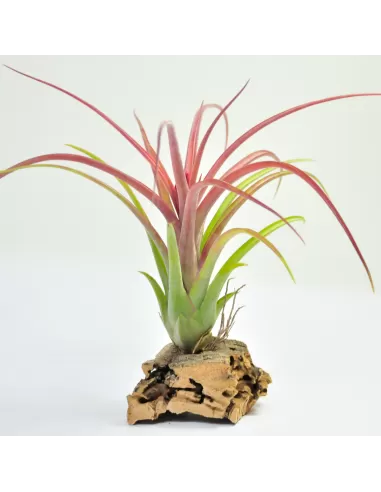
Tillandsia Brachycaulos × Caput-medusae
The Tillandsia Brachycaulos × Caput-medusae is an attractive ornamental hybrid belonging to the Bromeliaceae family, highly valued for its combination of intense coloration and exotic shape. It is an air plant ideal for collectors and eye-catching decor.
This hybrid combines two very different and complementary species:
The Tillandsia Brachycaulos, native to Central America, contributes its ability to acquire intense reddish tones, its compact growth, and its ease of cultivation, making it one of the most striking tillandsias in terms of color.
For its part, the Tillandsia Caput-medusae, native to Mexico and Central America, is characterized by its bulbous shape and twisted “medusa-like” leaves, as well as its great resistance and adaptability.
Thanks to this genetic combination, the Tillandsia Brachycaulos × Caput-medusae develops an intermediate structure, with a slightly thickened base and more open, curved, and dynamic leaves, which can acquire reddish or orange tones with good lighting.
During the flowering season, generally in spring or summer, it can develop an inflorescence with reddish tones and violet flowers, inheriting characteristics from both species.
Its growth is moderate and over time it produces pups, forming decorative clusters.
Thanks to its unique shape and coloration, it is ideal for decoration with air plants, exotic compositions, vertical gardens, or mounting on wood and cork, providing a very original touch.
Technical sheet
Scientific name: Tillandsia Brachycaulos × Caput-medusae
Family: Bromeliaceae
Origin: Cultivated hybrid (Tillandsia Brachycaulos × Tillandsia Caput-medusae)
Type: Hybrid
Watering: Moderate
Sun: High light / tolerates soft sun
Location: Indoors or sheltered outdoors
Flowering: Spring – summer
Fragrant flowering: No
Humidity: 50–70% (min 40 / max 80)
Temperature: 12–28 °C (min 5 dry / max 35)
Drought tolerant: Moderate
Tolerates cool and humid climate: Yes
Suitable for terrarium cultivation: No
Ideal for beginners: Yes
Rare Tillandsia: Yes